·19 min read
What SEO Mastery Summit Saigon 2026 gave me
From Thailand to Saigon, four days away from clients and a ticket to SEO Mastery Summit Saigon 2026. Is it worth flying to a conference in Asia as an SEO consultant or agency owner? I’ll be straight with you. If you are dealing with growth, hiring and how to bring AI into your work, yes. If you are looking for marketing inspiration for a Czech online store, probably not.
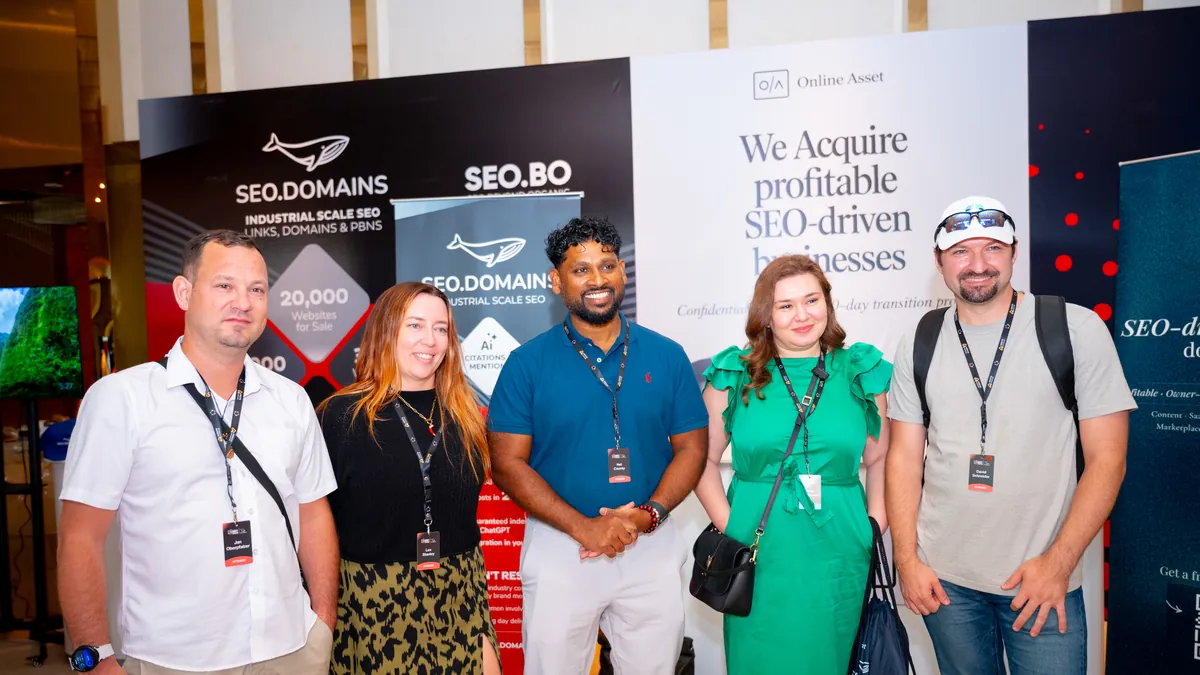
I flew in expecting the event to move me miles ahead. It did. Just not the way I expected. In the wider world, companies don’t skimp on SEO the way they do in the Czech Republic. Business owners there understand better that SEO is a key channel for their long-term success in the market and essential for getting their brand shown in AI citations.
It started in confusion, though. On the evening of March 9, I wrote to the organizers that, because of work and my flight from Kuala Lumpur, I hadn’t managed to fill out the form for the mastermind group. The reply was short. Just come straight to the JW Marriott in the morning. That morning, a smiling motorbike taxi driver took me there for less than a euro.
What SEO Mastery Summit is and who it is for
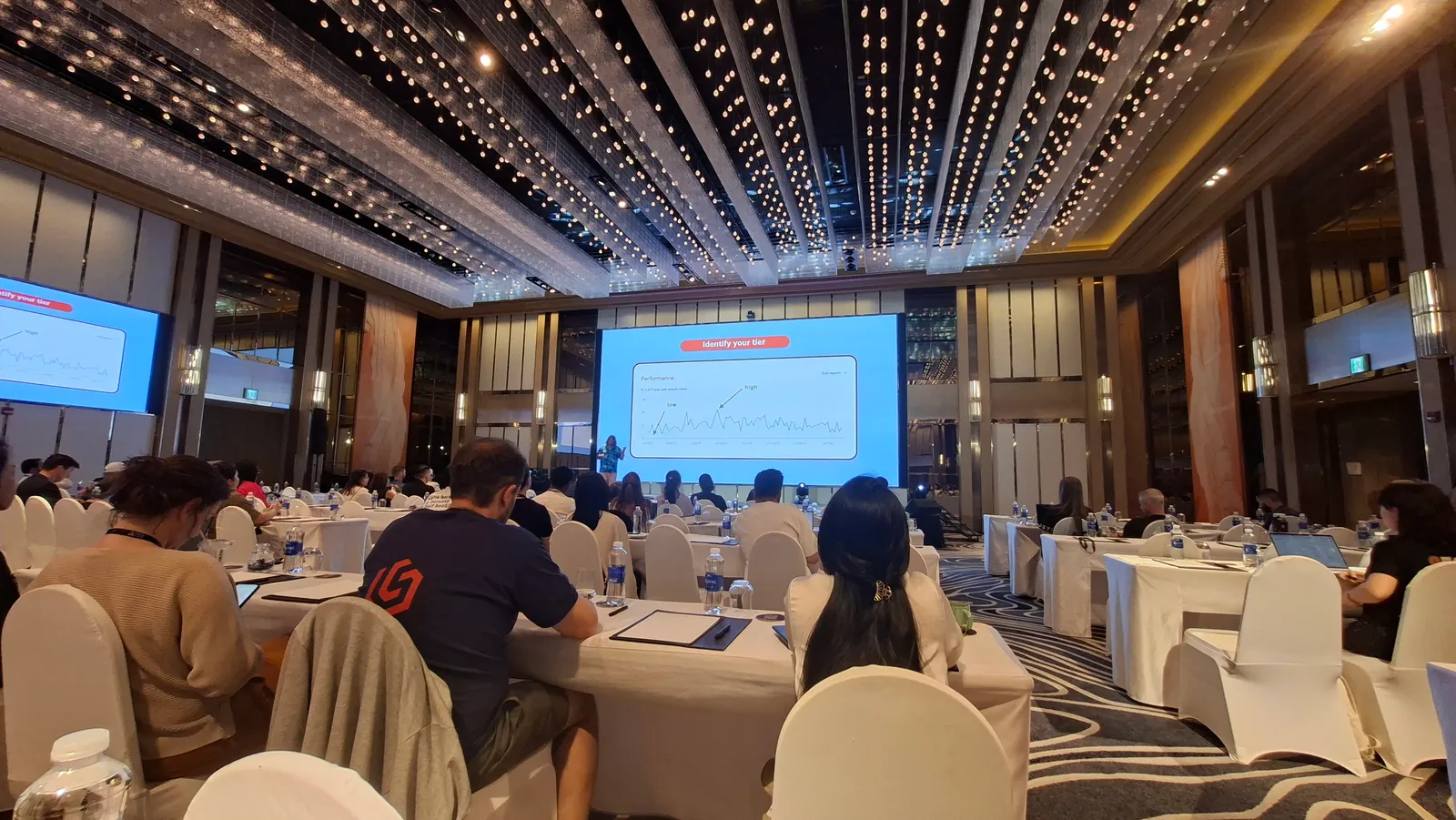
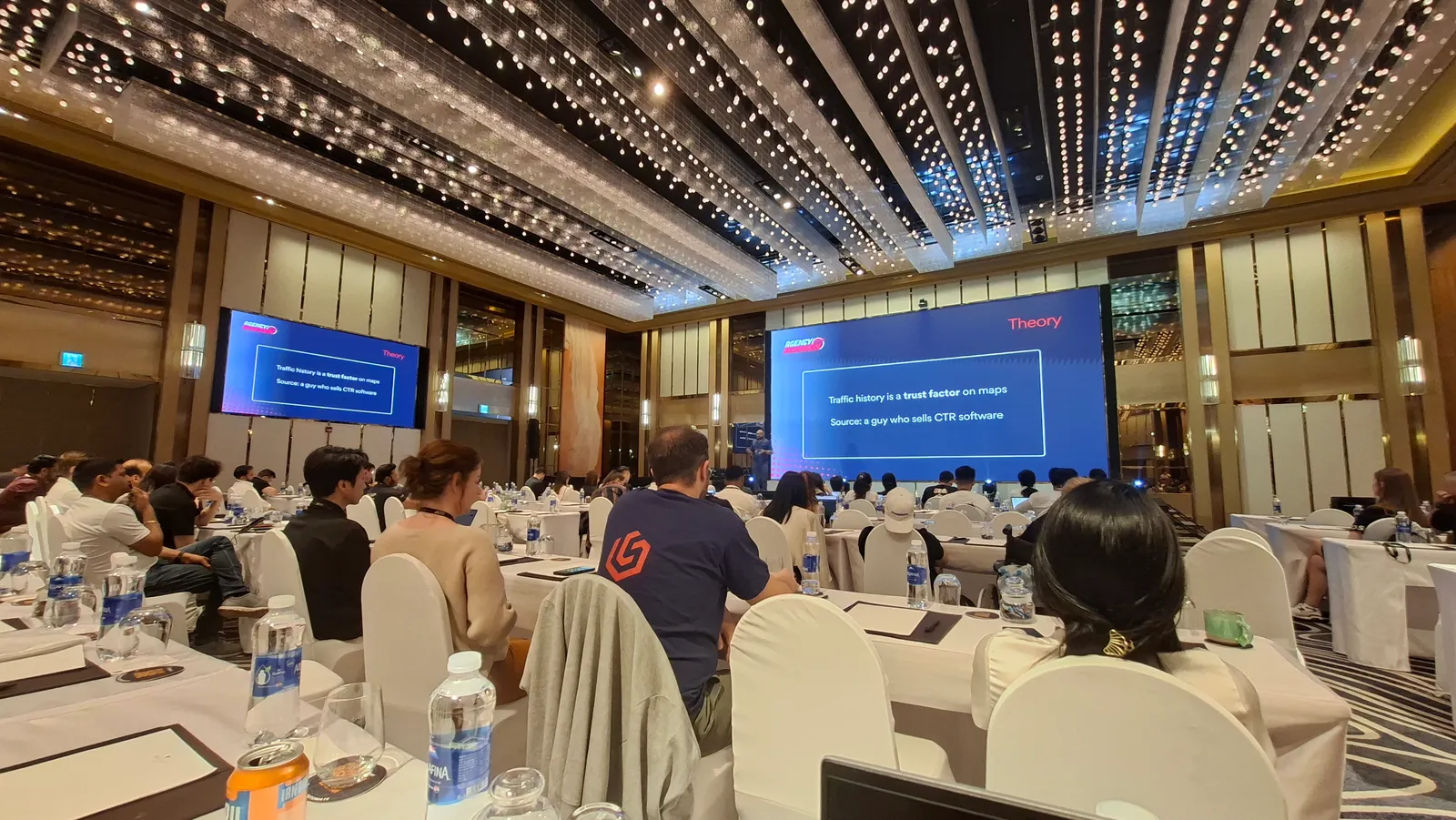
The event is run by Mads Singers. The 2026 edition took place from March 10 to 13 at the JW Marriott Saigon hotel in Ho Chi Minh City, Vietnam. The four days follow a clear rhythm. An optional mastermind program, a day of workshops and two days of talks on the main stage. I had a ticket for all four days, mastermind included.

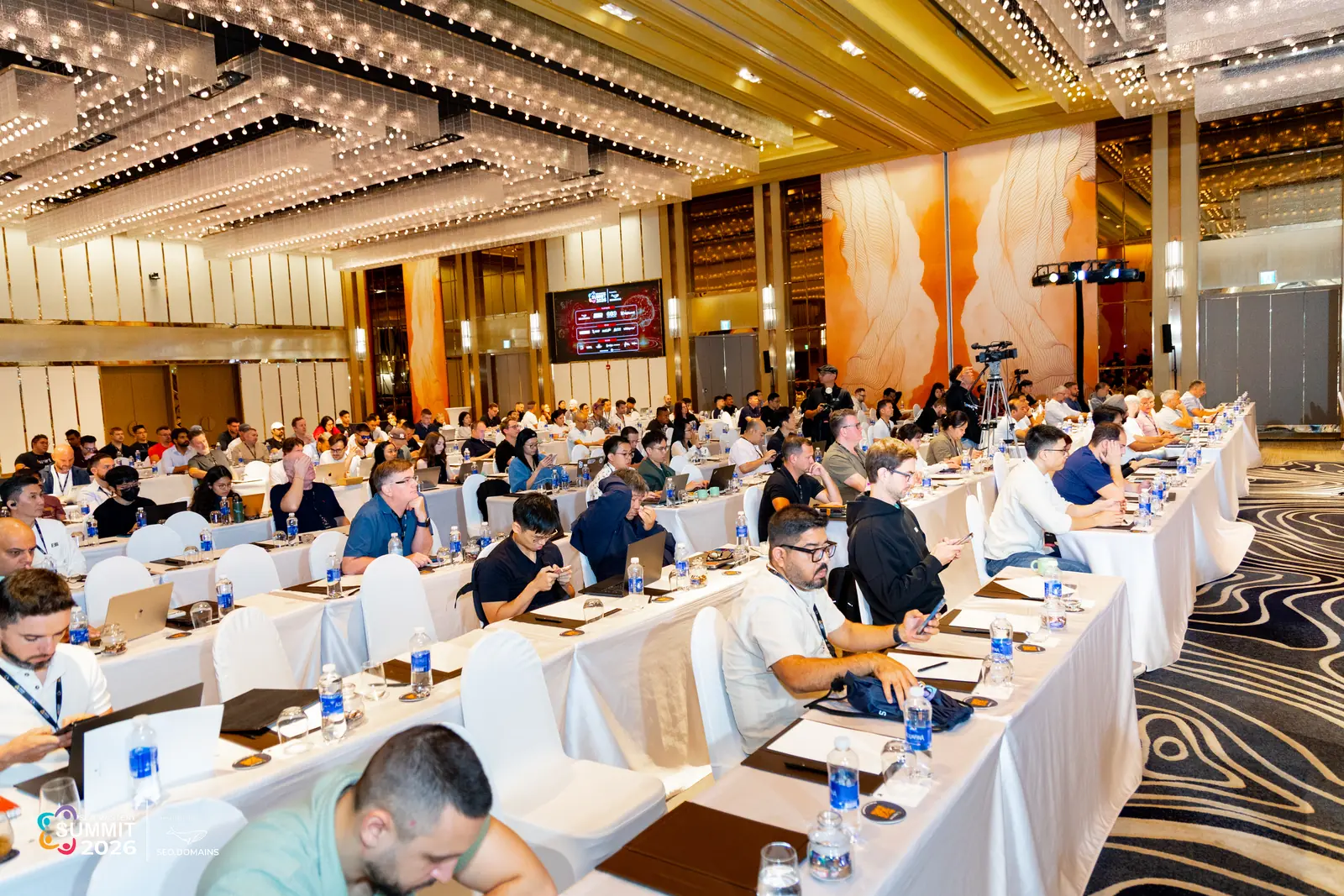
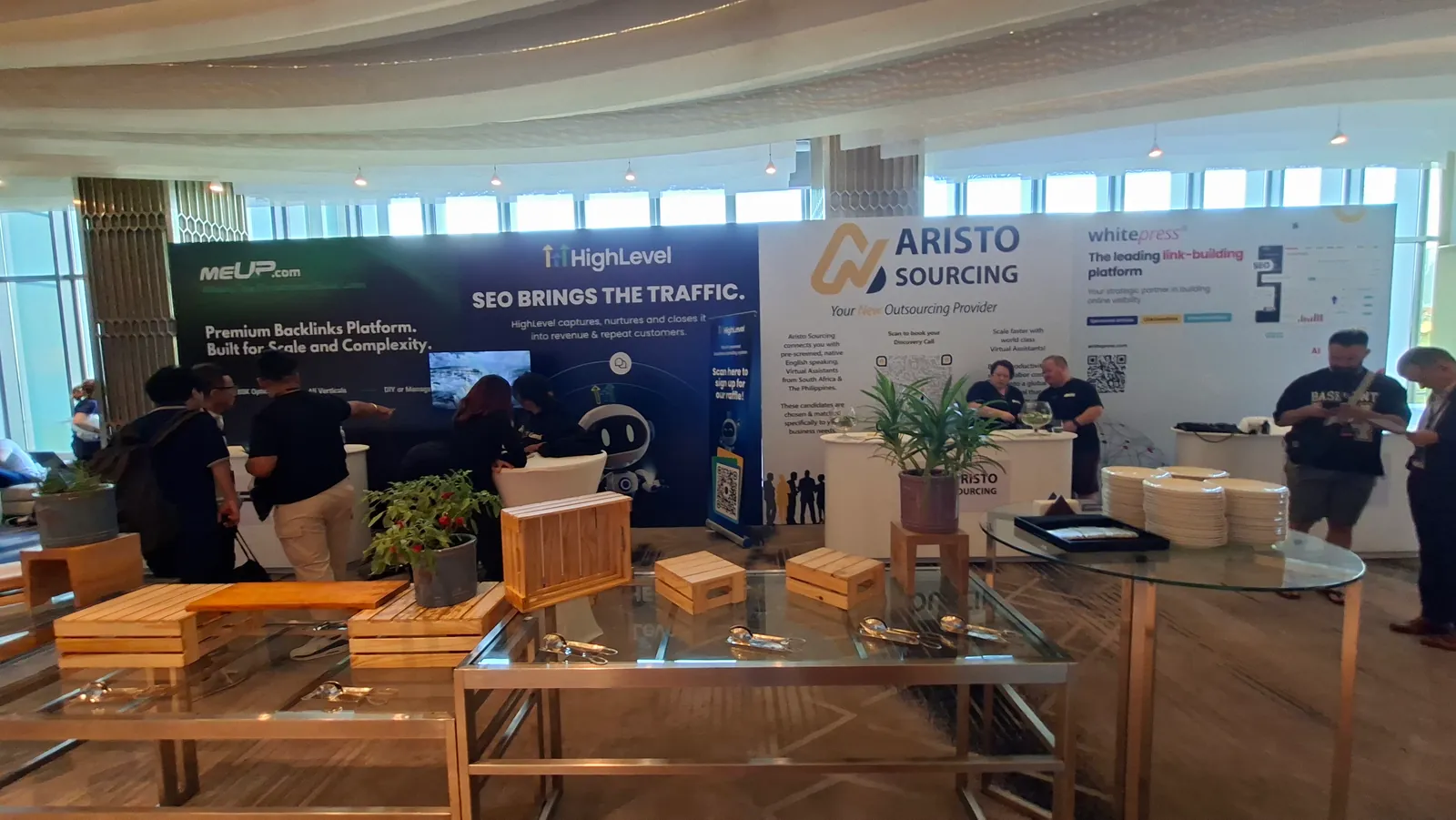
According to Ahrefs, around 400 people attend. I would say a lot more. Who will you meet there? Mostly top SEO consultants, agency owners, affiliate marketers, Heads of SEO and entrepreneurs. Backlinko put it in first place in its overview of conferences for 2026.
Not everything on the program suits everyone. Some of the talks were built on huge PBNs, expired domains and paid influencing of AI answers. You can listen to all of it, but take it on board with a filter.
How I enjoyed Saigon
Saigon is a modern and enormous city. And its traffic is utter chaos. You can barely cross the street on foot, and you won’t get out of the airport any way other than by taxi. Really, don’t try.
On top of that, it is really hot, up to 37°C, even in March. Parks and cafes are pleasant, otherwise you won’t survive without air conditioning.
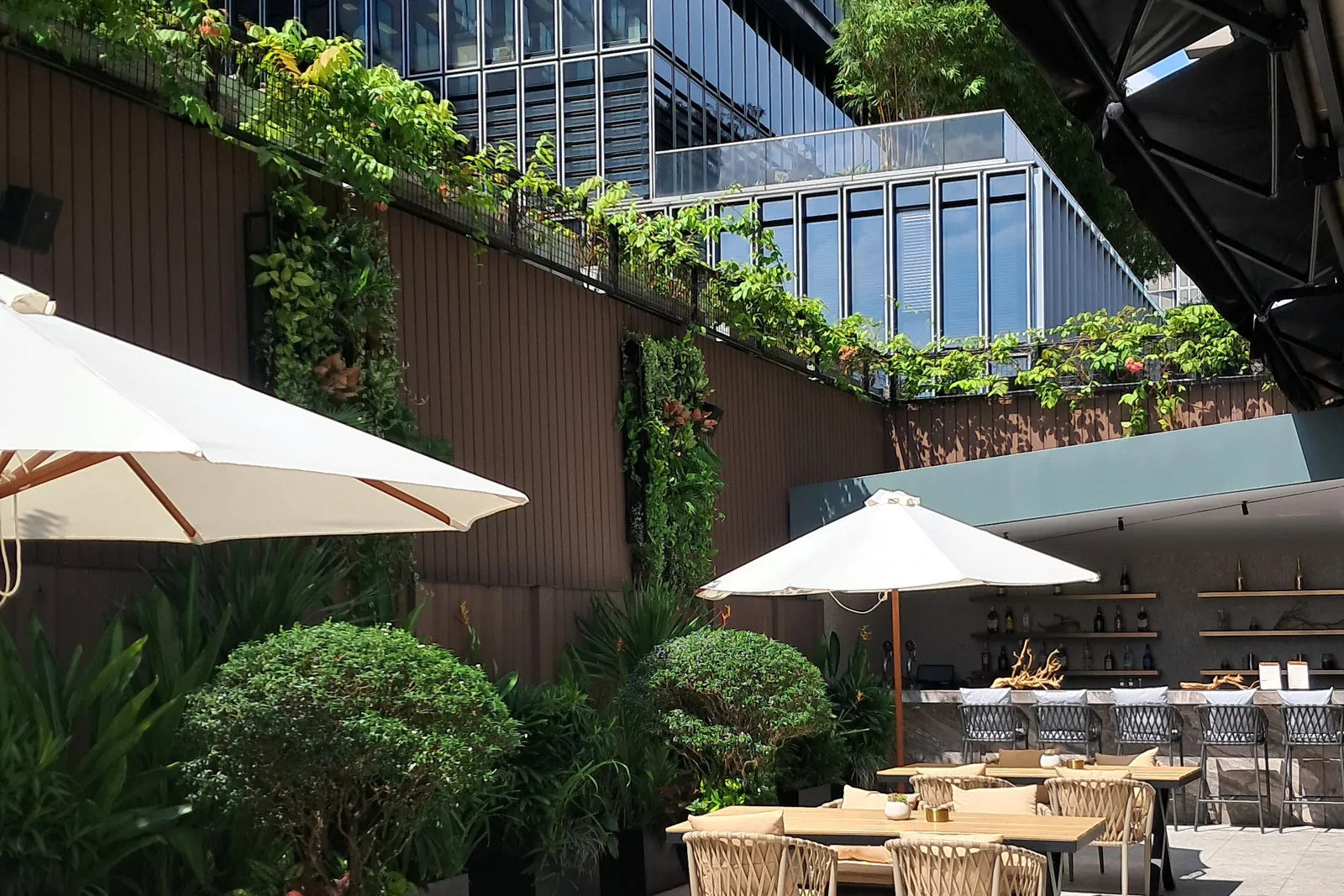
The conference takes place at the JW Marriott Saigon. It is an amazing, extra-luxurious hotel. It has a beautiful sun-filled terrace, a good place to meet other attendees and chat about SEO. A bonus is that you can smoke there. You will find a photo of the terrace in the gallery below. The food at the hotel is excellent, and the ticket includes breakfasts, snacks and lunches during the breaks between talks. In the city, the food is great and very cheap. Beer prices vary, but you can get one for less than a euro.
But the people gave me the most. They were very open and the atmosphere was great. I met people from the USA, Australia, Asia, New Zealand, Europe and the Far East, and came home with plenty of contacts. I also ran into fellow Czechs, Sarah Pokorná and Richard Hanzlík from the Impulse Riot agency.
I skipped the parties. I was so tired that bed always won in the evening.
The program day by day
Tuesday belonged to the mastermind program, where I consulted on the projects of a six-person group, Wednesday to workshops, and Thursday and Friday to the main stage. I enjoyed the SEO mastermind most. I saw plenty of things there that nobody in the Czech Republic deals with at all. A total of 24 speakers took part in the event.
Tuesday, March 10, mastermind program
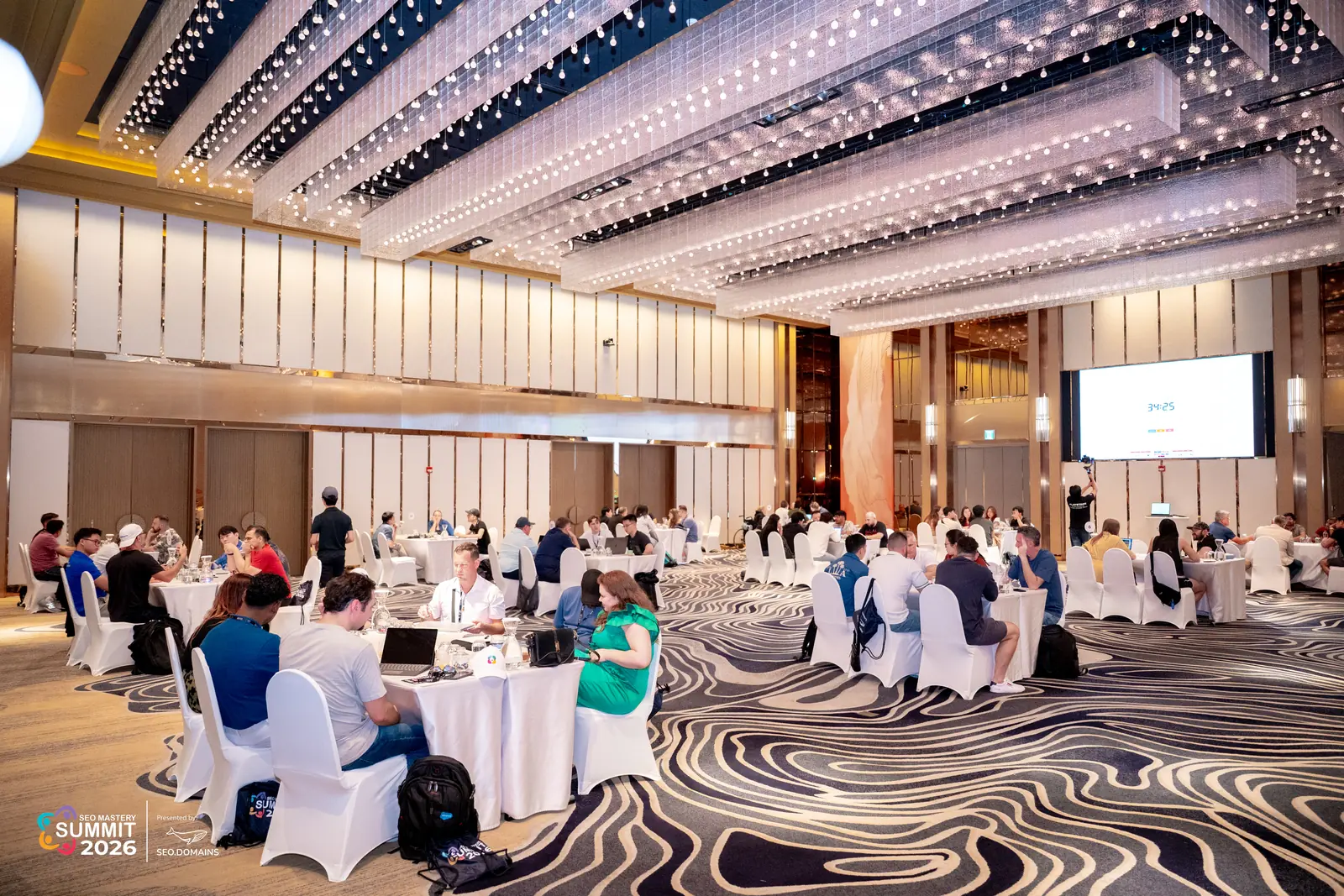
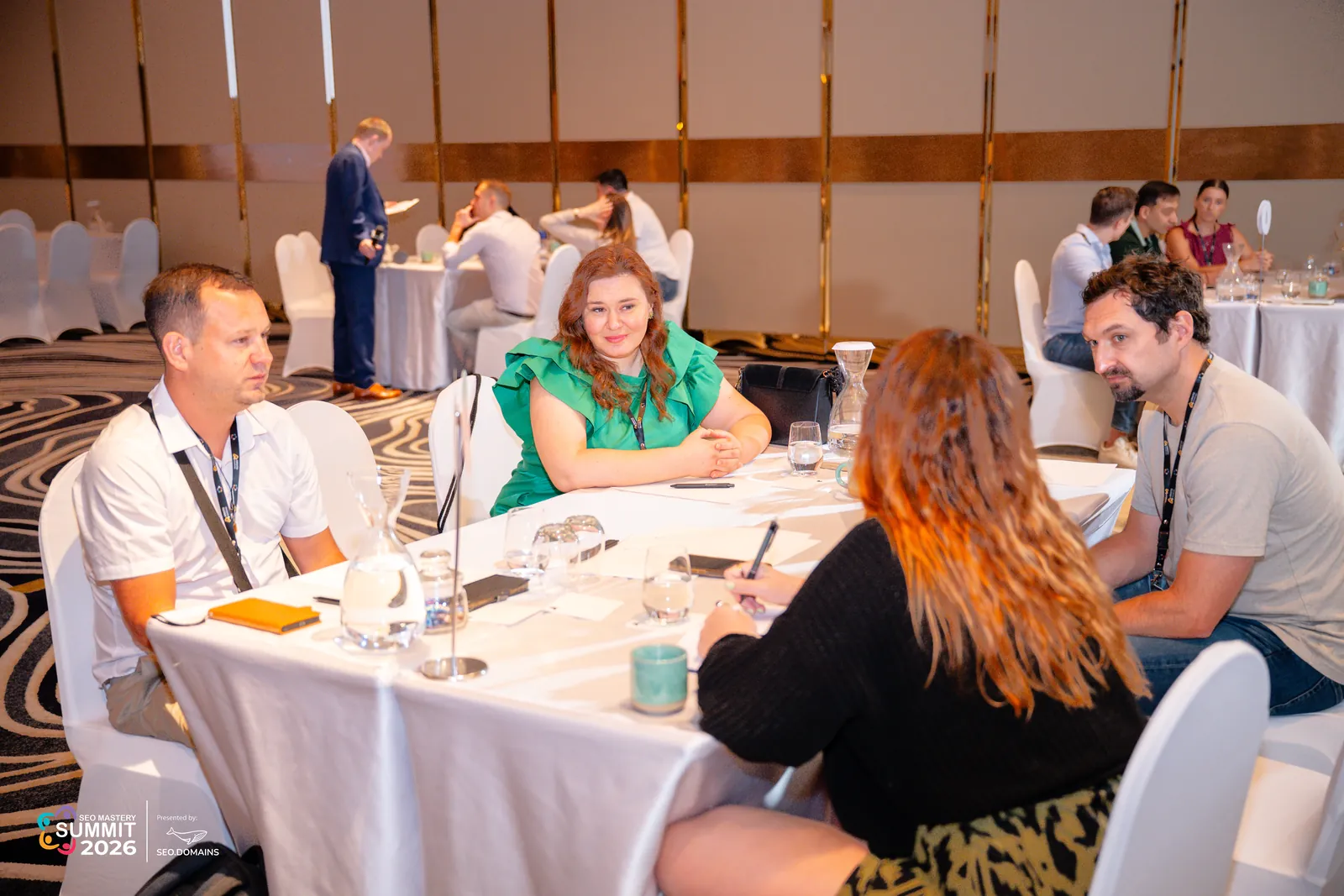
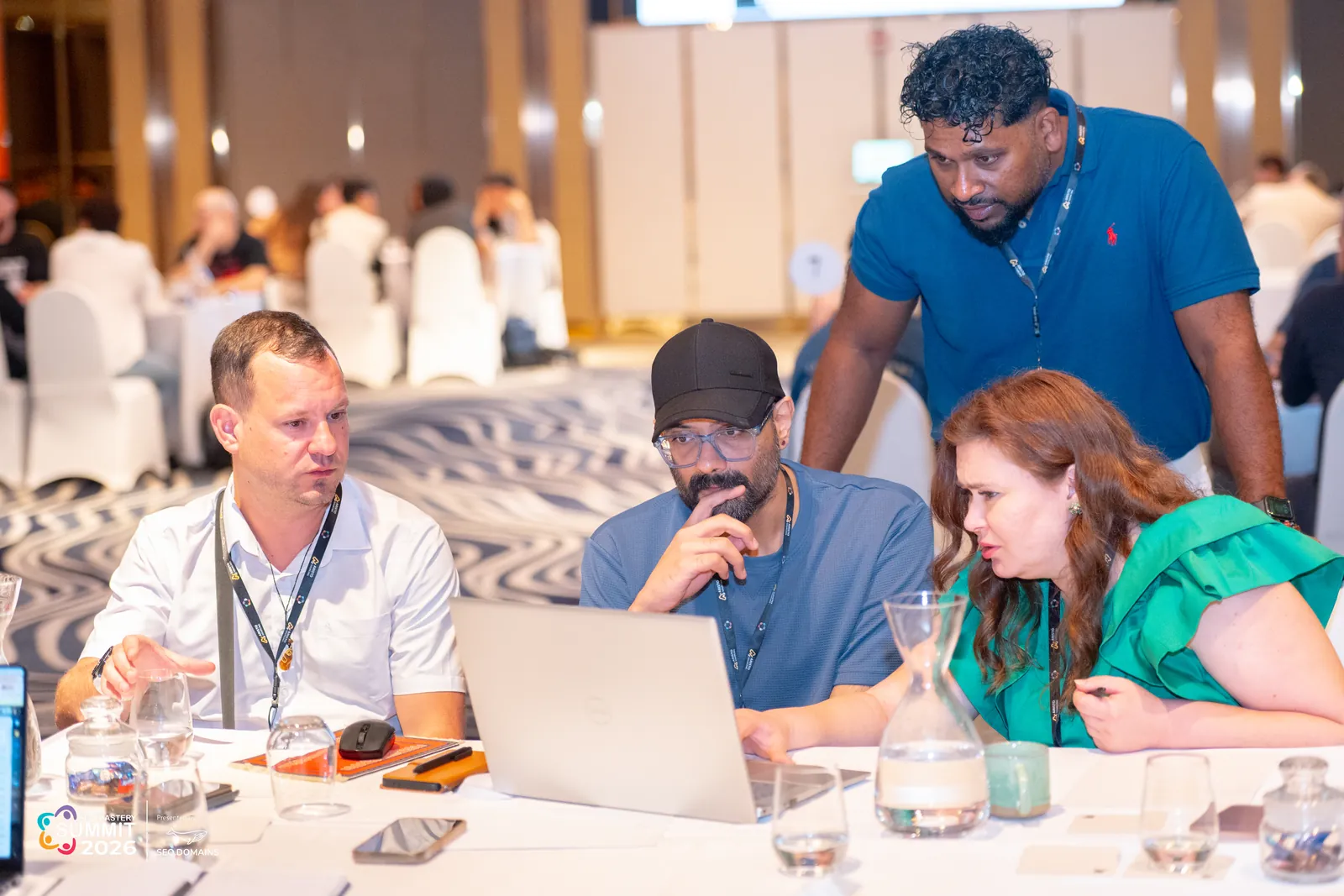
An all-day meeting in small groups, only for mastermind ticket holders. I describe what was discussed at the tables below.
Wednesday, March 11, workshops
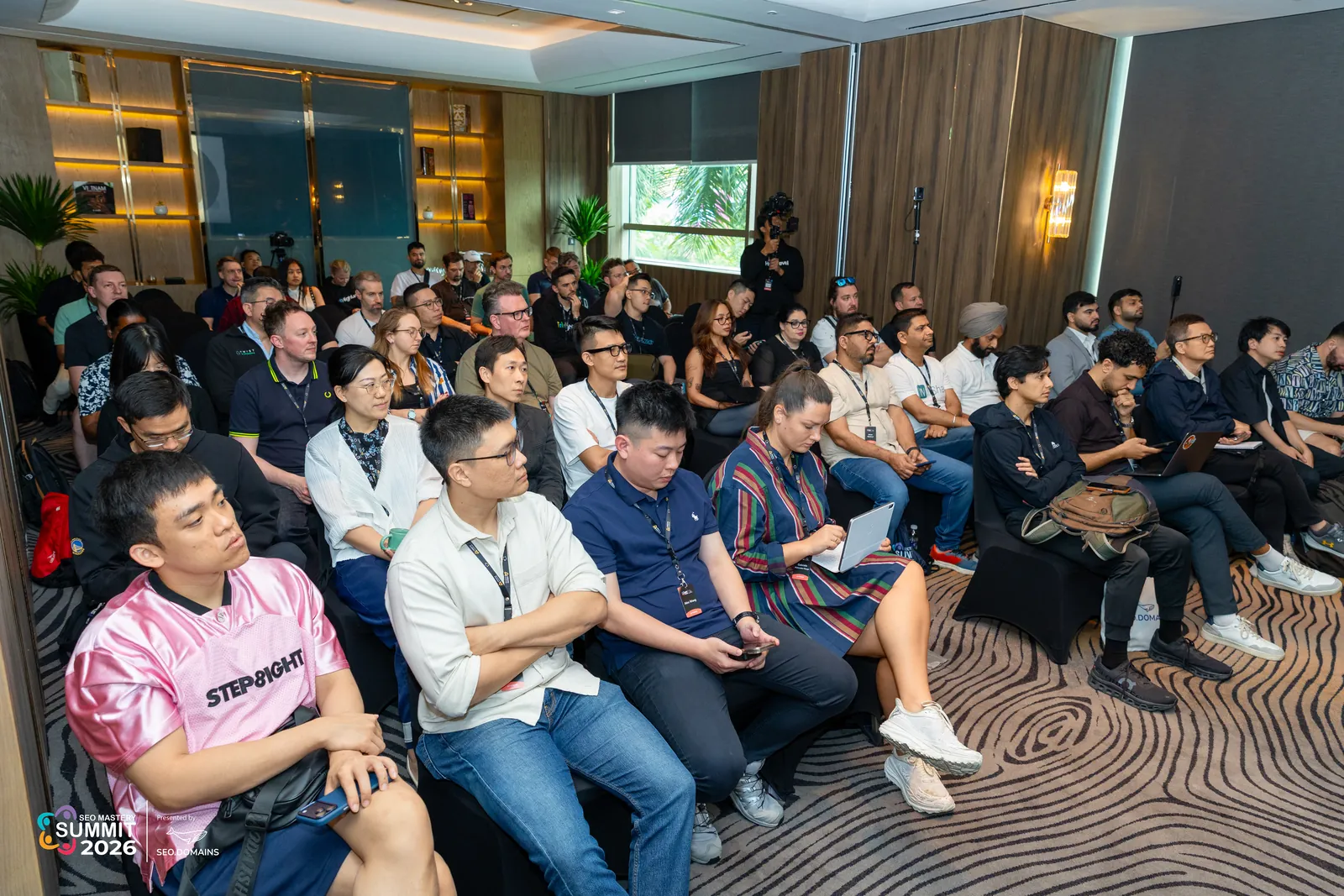
A day of workshops. The topics were advanced link building, local SEO, scaling an agency and operational efficiency.
- Hristo Bogdanov (SEO Beyond Organic), workshop If, When, And How To Use PBNs In Client SEO
- Andrea Abbondanza (University of Milan), Scaling Your Agency In 2026 With Confidence
Other workshops were led by Alex Tachalova (Digital Olympus) and Zachary Franklin (SmartEcomSEO). The evening continued with the opening party.
Thursday, March 12, main stage
The first main-stage day was about AI visibility, content creation and agency growth.
- Ivana Flynn (DMCA Boss), Google Is Broken. She showed parasite SEO and how a site takes over another domain’s strength through a cross-domain canonical.
- Mudi Elsaid (Tasken.ai), Content Optimization at Scale. In his view, a human in the loop doesn’t slow the system down but protects it.
- Robert Niechciał (SensAI Academy), Orchestrating a Swarm of AI Agents
- Kyle Roof (PageOptimizer Pro), (Un)Helpful Content? Nah, Just (Un)Helpful Robots
- Eean Clark-Ovens (Agency Assassin), 100% Organic SEO = Business Profit. He took apart myths about Google Maps signals and who makes money from them.
- James Dooley (PromoSEO), closing the day
In the afternoon, the side room hosted the workshop Replacing Human Departments With AI Swarms, led by Aashish from Koso.ai.
Friday, March 13, main stage
The last day revolved around scaling, lead generation and the future of search.
- Anikoo Hoang (Digital Web Solutions), Meta ads for B2B. One video, one target person, one pain point.
- Emma Jackson (HighLevel), lead nurturing. Speed and consistency decide, which is why automations and AI voice agents take over part of the work.
- Alan Cladx (Growth hackers Consortium), Black Hat SEO in the Age of AI
- Maja Jovancevic, STOP Blaming Google. In her view, iGaming affiliate sites don’t drop because of Google but because of how the company sets up its work.
- Matt Zimmerman (GetPrompted.ai), Making Content Sticky
- Kalin Karakehayov, keynote Successful SEO With A Stone Age Brain
The morning also included the talk “Do We Hire People… Or Machines?” That is exactly the question I deal with below. For me, though, the strongest moment of the whole event was the finale. The atmosphere was amazing and the panel discussions were great.
Other speakers included Dawood Manzoor Bukhari (DigiMagnet INC), Gautier Michenaud (online-asset.com), Przemek Suchanek (WhitePress), Brian Kato (Fusion Vine), Navneet Kaushal (PageTraffic Inc.), Terry Kyle (WPX.net), Anna Moragli (Searchmagic.io) and Cristina Song (Xpandir).
My top five talks
Of the more than fifteen talks and workshops I saw, these are the ones I am taking home.
- Hristo Bogdanov, If, When, And How To Use PBNs In Client SEO. The workshop covered when site networks make sense in client SEO and when they are a risk. Built carelessly, he said, they do harm, and they can only give leverage on clean, older domains.
- Robert Niechciał, Orchestrating a Swarm of AI Agents. He named rollout into the team as the deciding factor, not the choice of tools. I go through his talk in detail below, in the part on agent systems.
- Kyle Roof, (Un)Helpful Content? Nah, Just (Un)Helpful Robots. He compared how different language models write SEO-friendly text and showed his Keyword Golden Ratio.
- Alan Cladx, Black Hat SEO in the Age of AI. He went through how AI is being influenced in 2026, what works and what no longer does. With experiments, he showed how easily AI picks up and repeats planted information.
- Matt Zimmerman, Making Content Sticky. In his view, sticky content triggers something in people and moves them. It rests on five principles, namely the curiosity gap, emotion, personalization, open loops and reciprocity.
The mastermind is the day people talk about real problems
The mastermind took place on the first day of the event. The organizer put together a small group based on a questionnaire. It included agency owners as well as independent SEO consultants like me.
The format is called the hot seat. Everyone brings one real problem from their business. The others ask questions and give advice. At the end, everyone gets written notes with concrete steps.
For me, it was a huge experience. Everyone worked on their own issue while the others advised and brainstormed with them. I got very valuable advice on how to work and what to improve. Plus the perspective of owners of large international SEO agencies.
Who dealt with what, I’ll keep to myself. But the topics came up so often that they are worth writing down. SEO agency owners across continents have the same worries.
Six topics SEO agency owners around the world are dealing with
Who’s got the monkey on their back
The strongest idea of the day comes from the Harvard Business Review article Who’s Got the Monkey. Every problem is a monkey. When a colleague or a client brings it to you and you take it over, you are working for them.
The rule we arrived at is simple. Whoever brings a problem also brings two or three proposed solutions. You approve or steer, but you don’t solve it for them. This applies to the team and to clients alike.
A report is a negotiation, not a spreadsheet
The client dictates the scope of the report because nobody has told them no. The problem isn’t technical. The problem is that nobody negotiates the report. Together, we concluded that it is good to offer two or three report levels right at the start of a collaboration, from brief to full.
With existing clients, go through each metric with one question. What decision do you make based on it? Anything without an answer goes into an appendix, or goes altogether. The book recommended was The Challenger Sale by Matthew Dixon and Brent Adamson.
A cheap price says you compete with the cheap players
A package that is too cheap signals to a demanding client that you belong among the cheap players. The group suggested adding a premium tier above the current offer, roughly two to three times more expensive. Even if it rarely sells, it anchors the middle package as the sensible choice.
Other advice went the same way. Promise a process and expertise, not results. Test new prices on new clients first. And sell through the gap between the client and the market leader, not through a list of tasks. Two different sets of notes also included the idea of adding roughly 10% to a monthly retainer as a budget for testing AI and new methods.
In interviews, test thinking, not knowledge
AI can answer knowledge questions these days. So we put together questions that reveal how a candidate thinks.
- “Here is our website and a competitor that ranks higher. Why do you think that is?”
- “When do image alt texts matter and when don’t they?”
- “What is the most valuable thing you look for in a server log?”
- “When did an SEO strategy not work out for you and what did you do?”
- “A client wants a twenty-page report every month. What do you tell them?”
The alt text question is smarter than it looks. A senior puts it into context straight away. For an online store where people search through images, alt texts matter. For a service company’s blog, hardly at all. The answer “always” gives away someone who works from a template.
Add a short paid trial task on an anonymized brief and clear decision points after 30, 60 and 90 days. According to the group, a junior with good habits often brings more than an expensive senior with bad ones.
AI cites you, and traffic still falls
We discussed a situation every content site knows. AI cites you in Google’s AI Overviews, yet traffic is falling and banner revenue is drying up. So the problem isn’t visibility. The problem is the business model.
We agreed it is better to stop chasing traffic volume and measure value, meaning time on page and returning readers. Sell the audience directly to manufacturers and retailers, not through programmatic advertising. Build calculators and comparison tools that an AI answer can’t replace and that naturally attract links. And above all, build on your own experience, because AI can’t imitate it.
You can check for yourself whether AI assistants mention you at all. I describe the method in my article on how to find out whether ChatGPT recommends you.
A delegation audit instead of more overtime
Write down all your activities, starting with the one where your time is most expensive. For each, ask yourself two questions. Can AI handle it? Can a trained junior handle it? What is left is your real work. The rest is a system to build or a person to hire.
The group agreed that the winners will be those who build repeatable systems first and only then find people or AI for them. Teach juniors by hand first, then with AI. Otherwise they won’t recognize AI’s mistakes.
Hire a person, or scale yourself with agents?
In the group, I heard clear advice. Hire a person. It makes sense. Of time, money and quality, you only get to pick two. When your time is used up and you don’t want to sacrifice quality, what is left is investing money. Selling your own time has a ceiling, even at a high rate.
According to the group, every founder knows the fear of hiring. The advice was to start with the least risky tasks, such as formatting, publishing or importing data. First a freelancer for a few hours a week, then an employee.
The talk “Do We Hire People… Or Machines?” asked the same question on stage.
What came from the main stage
Robert Niechciał from SensAI Academy gave the talk Orchestrating a Swarm of AI Agents on the main stage. He argued the opposite. In his view, the agency of the future looks more like a software company that manages specialized AI agents instead of hiring people. With every additional person, the number of communication channels grows. With an agent, he said, it doesn’t.
This changes the human role. People do less, and think and check more. AI handles the how. The human owns the what and the why. Niechciał compared it to centaur chess, where the quality of the process decides, not the power of the technology. Start with boring things such as reports and quality control, with guardrails from day one and always with a human in the loop.
For AI search, he mentioned something I consider essential. To AI, a page is source material. A query breaks down into sub-queries, and AI evaluates individual parts of the page separately. So what decides is the structure, an answer right at the start and fact density. That is exactly what I focus on when I do AI SEO for clients.
Which way I went
Both are true, just for a different stage and different work.
People often make fatal mistakes. That is why I now have a large team of specialized AI agents and my own SEO tools. But that doesn’t mean AI does everything for me.
I am still the brain. I decide what gets done and why. Each agent has its own role and its own rules, and none of them works alone. They check each other’s outputs. When two disagree, I decide. When one of them starts making things up, the others catch it.
Agents speed up your work. Judgment, responsibility and the final say stay with a human. And that human is me.
Exactly how I have it set up, I keep for my work with clients.
Who the trip to Saigon is worth it for
Before you buy a plane ticket, go through this table.
| Your situation | Go or not |
|---|---|
| You run an agency and are hitting the ceiling of your own time | Go, and take the mastermind. This is exactly what gets discussed there |
| You are an independent consultant unsure whether to hire | Go. You will hear both sides, from the stage and from peers |
| You run affiliate or content sites | Go. Affiliate SEO has its own space in the program |
| You manage marketing for a Czech online store and want inspiration for your team | Probably not. The program is aimed mainly at agencies and affiliates |
| You only want to hear safe methods for a client website | Go only with a filter. Some talks are built on PBNs and buying mentions |
What I am taking home from Saigon
There is really a lot of it. It has changed the way I look at all my work, and this year I am going to another SEO conference, the Chiang Mai SEO Conference in Thailand, for a full 5 days.
- I understand where AI assistants get their data and how their answers can be influenced. I know which factors decide whether they mention a client’s brand, and what we can do about it.
- I saw how AI Overviews can be “hacked” and what manipulating them can look like. For better and for worse.
- I know how to build agent systems and entire content production lines.
- I build my own SEO tools and use them myself. I won’t reveal more for now.
- I know more about how to run an SEO agency toward better business results and how to position myself.
- I confirmed how much power link building still has, along with classic SEO.
- And I saw the crazy sums that flow through SEO for gaming and casinos.
How has it helped me and my clients?
I am using it with clients straight away. I know where AI assistants get their data, and I build the client’s brand accordingly so that they cite it. And because I know how AI Overviews can be abused, I can also protect clients.
The key difference abroad is how much companies invest in SEO
But one difference stuck in my head most. In the wider world, companies don’t skimp on SEO the way they do in the Czech Republic. From conversations at the event, I know that companies there spend roughly €4,500 to €45,000 a month on SEO, sometimes more. They understand that SEO is their most important channel, because they pay astronomical sums for PPC. In the Czech Republic, it is often a struggle to get roughly €800 or €1,200 a month for quality work from an agency or a freelancer, and that is sad.
The conferences also differ in content. In the Czech Republic, we have many great SEO events, and I enjoy going to them. But Czech SEO conferences tend to be more of a showcase for big agencies and the scene’s regular personalities, and I miss more variety, tests, deeper studies and practical things there.
Saigon was entirely on the border of gray hat and, in places, black hat SEO. Don’t take that as a recommendation. But that is exactly what made it interesting, because I saw everything people around the world are trying today and what really works.
Practical tips if you go to the conference in 2027
The next edition takes place from March 16 to 19, 2027, again at the JW Marriott Saigon hotel. You will find ticket prices on the official SEO Mastery Summit website. They go up as the date approaches.
Sign up for the mastermind via the form well in advance. I missed it and got lucky. You can catch up on talks you miss. Recordings were available in the members’ area of the event website from April.
Stay in a better hotel near the conference, ideally at the JW Marriott itself. Given the traffic in Saigon, it will pay off.
Exchange money in advance. The ATMs at the airport may not have cash. Have Vietnamese dong on hand as soon as you land, because some hotels want payment in cash on the spot.
If you change planes in Kuala Lumpur, be aware that the airport is huge and Malaysia is very expensive, especially at the airport. If you transfer within one terminal, you don’t need to fill out the Malaysia Digital Arrival Card (MDAC). But if you move between the KLIA and KLIA2 terminals, you go through passport control and need the MDAC. You fill it out online, no earlier than three days before arrival.
For a tourist trip to Vietnam, Czech citizens don’t need a visa from August 15, 2025, to August 14, 2028, and can stay for up to 45 days. For a work or business trip, the Czech Ministry of Foreign Affairs lists an e-visa, so check what applies to you based on the purpose of your trip.
Before you arrive, complete the online pre-arrival registration. The ministry recommends it to all travelers, and some airlines ask for it at boarding.
What will I do differently next time?
If you are going for the first time, take the advice I would give myself.
- I’ll take a taxi straight from the airport.
- I’ll bring more business cards.
- I’ll take more photos.
- I’ll sit closer to the stage.
- I’ll go to all the parties.
Why will I be glad to go back? I have never seen so many smart people in one place. There was something to learn from everyone, and at the same time I could pass on what I know.
If you are working out how to prepare your website for citations in AI answers, you don’t need to fly to Saigon for that. Write to me via the contact form and I’ll tell you where to start.
Prepare your website for citations in AI answers
Send me your website address and I’ll tell you which of the conference topics make sense to tackle first in your case.